Artists are sharing their Spotify earnings and highlighting the value of vinyl in the process
9 million streams won’t pay the bills for many bands, but small changes in your listening choices can help artists in big ways.

It’s the time of year for your apps to tell you what music you’ve been listening to and apparently how old you are. The indie pop Welsh band Los Campesinos! took the moment to breakdown their streaming earnings for the year...and it’s not great.
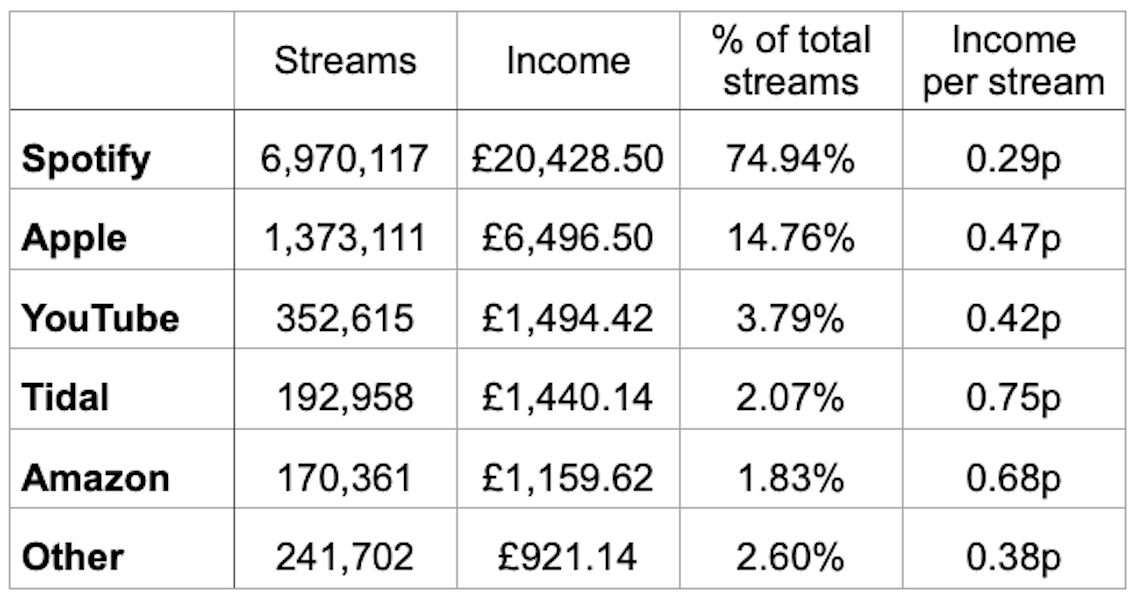
| Platform | Streams | Income | % of total streams | Income per stream |
|---|---|---|---|---|
| Spotify | 6,970,117 | $27,374.19 | 74.94% | 0.39¢ 0.29p |
| Apple | 1,373,111 | $8,705.31 | 14.76% | 0.63¢ 0.47p |
| YouTube | 352,615 | $2,002.52 | 3.79% | 0.57¢ 0.42p |
| Tidal | 192,958 | $1,929.79 | 2.07% | 1.00¢ 0.75p |
| Amazon | 170,361 | $1,553.89 | 1.83% | 0.91¢ 0.68p |
| Other | 241,702 | $1,234.33 | 2.60% | 0.51¢ 0.38p |
Source: Los Campesinos data converted to USD.
Los Campesinos! made £31,940.29 ($42,587) from 9.3 million streams across all platforms. That’s not a ton for a 7-piece band. What jumps out is that Spotify by far led their streaming plays accounting for 75% of total streams and £20,428.50 of their total earnings, but paid far less than other platforms, and that’s while getting a healthy £0.0029 ($0.0039) per play on Spotify. The band notes that had every Spotify stream been on other platforms they could have doubled their earnings. If just 1% of those streams were vinyl sales I estimate the band would have made approximately $100,000 more for the year. (I reached out to Los Camp to ask about their physical media sales numbers and will update this article if they respond.)
If everyone who streamed All Hell on Spotify had done so using Tidal instead, we would have received an extra £31,847.38, which would double the amount we made from streaming of the album in this time period. Or if everyone used Apple Music it would have been £12,331 more.
The Faustian Spotify Bargain
The comparisons aren’t exactly apples to apples. Spotify has ad-supported free tiers that pay far less than paid streams. Tidal doesn’t have a free account option and will make monthly payments directly to a user’s most played artist at the top tier. One could argue that Spotify is more akin to radio – a discovery engine as they like to say. The platform pushes artists to make their music part of Spotify’s vibes playlists where they can pay less per stream. Spotify was accused of forcing artists to reduce their royalties by 30% to be part of Discovery Mode.
Spotify calls these playlists “perfect fit content” and developed Spotify4Artists so artists can tailor their music based on what is getting the most plays. Bland background noise is favored as part Spotify’s strategy to court “lean-back consumers.” It is a platform built to stop us being intentional about enjoying music and simply be consumers of vibes. Spotify built an empire off the artists and they seem to be doing increasingly awful things with all that money and power. Despite all this, many artists are stuck due to Spotify’s streaming dominance. They are forced to shake hands with the devil in order to get discovered and eke out a living as a musician.
Spotify is probably the worst thing that has happened to musicians. The streaming culture has changed an entire society and an entire generation of artists.
The excellent music publication Hearing Things announced in July that they could no longer square their values with promoting their writers’ favorite bands through curated Spotify playlists. Their decision was influenced by the flood of artists leaving the platform due to their low payments, and invasion of AI slop at the same time it was revealed CEO Daniel Ek used sales of his Spotify stock to invest in killer robots. Spotify even doubled-down on running ICE ads. Visions of Terminator bots rounding up immigrants while playing soothing AI-created elevator music abound.
Read journalist Liz Pelly’s excellent book Mood Machine if you really want to go deep on Spotify’s many ills.

Mood Machine: The Rise of Spotify & the Costs of the Perfect Playlist
You Can Help Bands Hit the Charts
There’s another negative side to streaming vs buying an album. Charting is still a thing. Hitting the music charts like Billboard and the Official Charts in the UK can translate into more exposure, more bookings, more ticket sales, and more album sales.
The charts use weighted formulas to translate streams into vinyl sales. Billboard uses SEAs (streaming equivalent albums) to convert streams into a single album sale. It takes 3,750 of those free Spotify streams to equal one vinyl or CD sale and 1,250 streams by paying subscribers.
That means your vinyl purchase not only puts far more money in an artist’s hand, but also counts for as many as 3,750 streams.
As of June, Billboard counts the first seven days of an album release as the first week, which is the crucial period for charting. The first week also includes pre-sales. A new album would need millions of streams to chart, but as low as a few hundred vinyl and CD sales could get a lesser-known group on the Billboard 200 or Billboard’s genre specific charts.
 Oh.
Oh.
I conducted dozens of interviews for a project over the past year at record stores, merch tables and festivals asking fans why they bought vinyl. I was shocked how consistently everyone from older music lovers to teens said their number one reason was “supporting the artist.” It’s heartening. Despite the many forces wanting to make us all simply consumers, not lovers of music, people of all ages are still being intentional about the music they listen to.
So if you want to support the artist, get that album in a physical format, if that’s not possible, purchase a download on Bandcamp or wherever they offer them.
But we all have times where dropping a needle isn’t an option. All streamers are not the same. Spotify is the worst for artist on many levels, including payments. Tidal, Deezer and French streamer Quboz all pay out more. I’m giving Quboz a try for 30 days. Most data suggests they pay the most and their leadership seems to be truly artist-forward. The platform was the first to openly confirm their payout rates last March, while others all try to keep their rates hidden in a black box. It’s $18.72 per 1000 streams. They also have a download store and invest in real humans curating playlists and unearthing hidden gems.
Whatever you choose, stay intentional about your listening and remember that there are real people behind the music you love despite how much some streamers want it to just be an AI bot. The revolution will not be streamed.
Note: Here’s the original data from Los Camp in GBP.